There is a habit in B2B marketing that tends to go unchallenged.
A strategy works once, or even a few times, and it quietly becomes the default. Over time, that default turns into routine. And eventually, routine starts to limit results.
Social media is one of the clearest places where this shows up.
For B2B companies, LinkedIn becomes the center of gravity. Content is built with that audience in mind. Performance is judged through that lens. It is not a bad instinct. In many cases, it’s a logical starting point. But that’s rarely the full picture.
Why a Single-Platform Mindset Falls Short
There is no question that LinkedIn plays a central role in B2B marketing. According to a survey by Worldmetrics:
- 78% of B2B companies generate leads through LinkedIn
- LinkedIn accounts for roughly 60% of B2B social traffic
- It remains the most widely used platform among B2B marketers
That level of dominance makes it easy to treat LinkedIn as the primary, and sometimes only, place to focus.
However, Soax identifed that the same data also highlighted a gap.
- Facebook is still used by over 80% of B2B marketers
- Instagram adoption continues to grow, with strong engagement tied to visual and video content
- Short-form video across platforms delivers some of the highest engagement rates overall
In other words, while LinkedIn may lead, it’s not where all audience behavior happens.
The Same Audience Does Not Behave the Same Way Everywhere
A procurement manager does not scroll LinkedIn the same way they scroll Instagram. A contractor checking Facebook is not looking for the same type of information they would engage with during the workday.
Context matters.
On LinkedIn, people tend to spend time with:
- Industry perspectives
- Career-focused content
- Professional insights
On Facebook, interaction shifts toward:
- Community-driven posts
- Event conversations
- Familiar, ongoing dialogue
And on visual-first platforms:
- Short-form video
- On-site moments
- Content that feels less formal and more immediate
None of this is new. What is often missed is how strongly it should influence content decisions.
Buyers are already forming opinions before they formally enter a sales process, with social media playing a meaningful role in that early exposure.
If the experience does not match the platform, the message tends to get ignored.
Engagement Does Not Mean the Same Thing Everywhere
It’s easy to compare performance across platforms as if the metrics are interchangeable. They’re not.
A post that sparks conversation on Facebook may never drive meaningful traffic. A LinkedIn post that generates clicks may not create much discussion. Both outcomes can still be valuable.
For example:
- LinkedIn often delivers stronger engagement rates for B2B content
- Other platforms may support broader reach or more informal interaction
Instead of asking which platform performs best, a more useful question is: What role is each platform playing?
That shift tends to open up more opportunities than trying to force the same outcome everywhere.
Where Strategy Usually Breaks Down
Most marketers do not intentionally treat every social platform the same. It tends to happen gradually.
A piece of content performs well. It gets reused across channels. The format stays intact. The caption barely changes. Efficiency takes priority over relevance.
Over time, a pattern forms the same message, structure, and expectation of results. What gets lost is the nuance of how audiences interact in each space. That’s usually when engagement starts to flatten.
A More Grounded Way to Approach Social Media
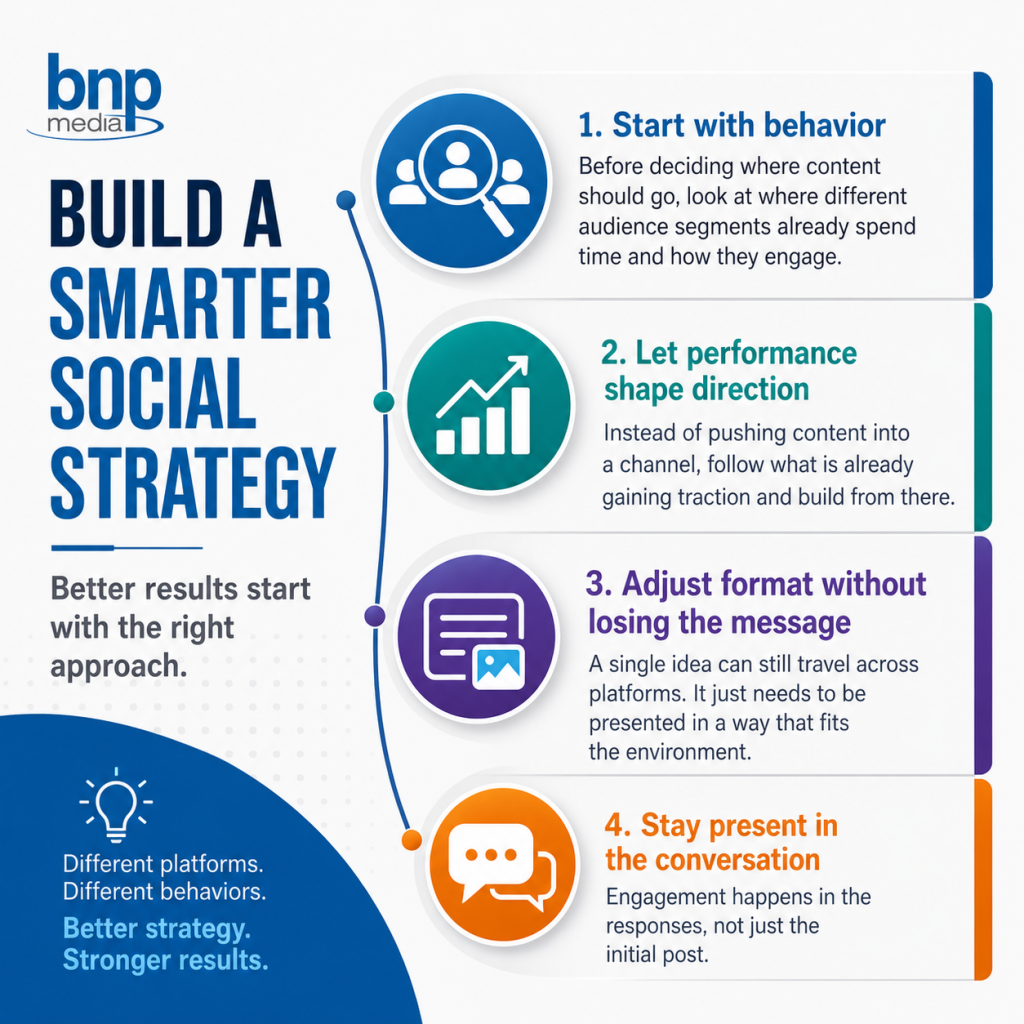
There is no need to rebuild a strategy from scratch. Small adjustments tend to have the most impact.
From Frustration to Insight
When something underperforms, the instinct is usually to fix it quickly, ignore it, or move past it. But, there is another option. Pause long enough to understand what the results are telling you.
In many cases, it’s not a failure of the idea, but a mismatch between the content and the context in which it was delivered. That distinction changes what you do next.
A Real Example From BNP Media
This exact scenario came up in a recent Confessions of a Mad Marketer conversation with Alexandra Ditoro, Associate Director of Social Media at BNP Media.

She walks through a moment where a platform assumption led to missed engagement, and how looking more closely at audience behavior shifted the entire approach.
What stands out is not just the mistake. What stands out is how quickly the perspective changes once the data is viewed differently.
Where This Leaves Your Social Strategy
There is no shortage of platforms, tools, or tactics in social media.
What tends to make the difference is much simpler.
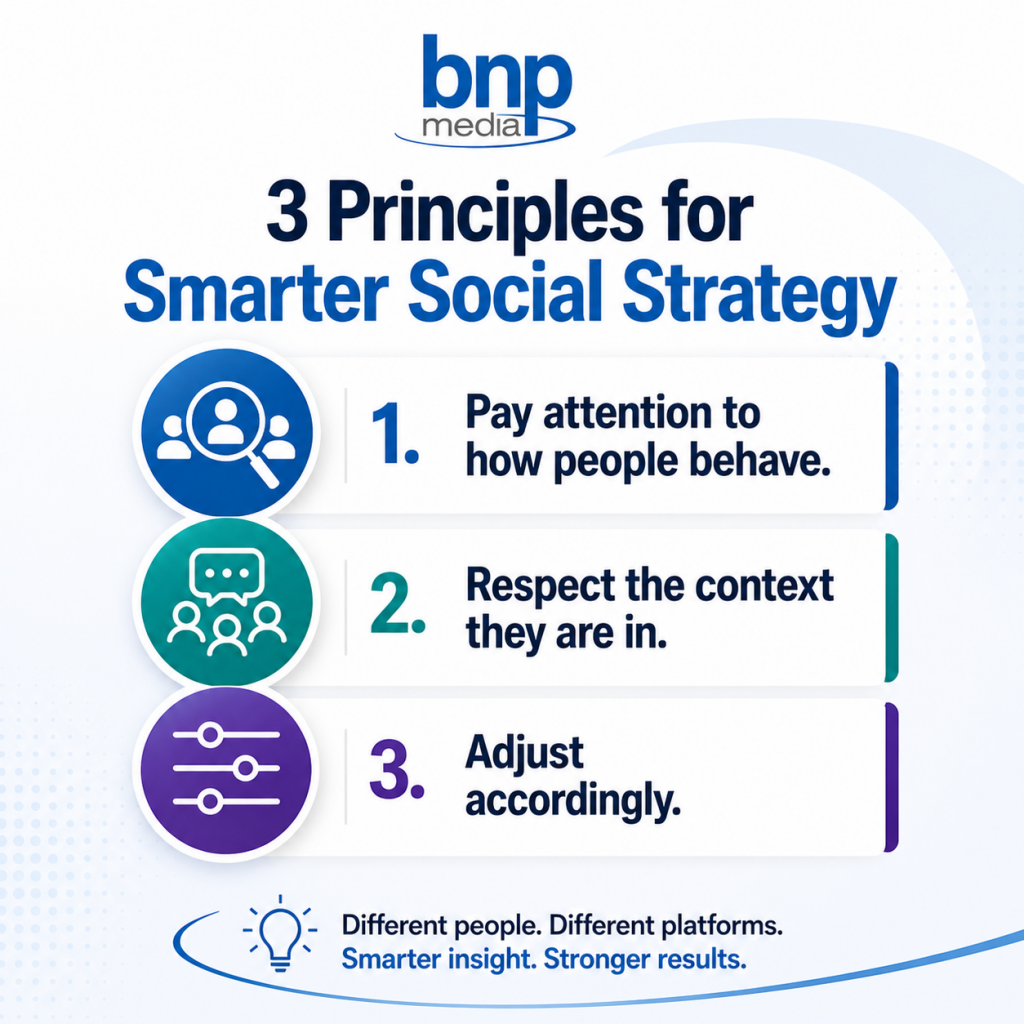
The closer your strategy reflects that reality, the more consistent your results will become.
Image by fauziEv8, licensed via Envato Elements, May 4, 2026.