
For years, marketing attribution felt relatively straightforward. A buyer searched for a keyword, clicked an ad, filled out a form, and entered the pipeline. Marketers could connect performance to channels with a reasonable degree of confidence.
That reality no longer exists.
Today’s B2B buying journey is fragmented across:
- Search
- AI tools
- Webinars
- Events
- Social
- Recommendations
- Retargeting
- And so much more…
And buyers rarely convert after interacting with just one touch point. They weave-and-bob through dozens of mini-interactions before they ever call sales. This complexity is forcing marketers to rethink how attribution actually works and whether traditional models still tell the full story.
Attribution Is No Longer a Single-Channel Conversation
One of the more revealing parts of a recent Confessions of a Mad Marketer conversation with Marty McDonald, Co-Founder of Bad Rhino, centered around this exact issue.
During the discussion, Marty described attribution as “one of the most difficult things in digital” because buyer activity now happens across interconnected channels and behaviors.
A prospect might:
- Attend an industry event
- See a sponsored LinkedIn post weeks later
- Search a brand name after hearing about it elsewhere
- Download a resource
- Revisit the website through retargeting
- Subscribe to an email list
- Then…engage with sales months later
So which interaction deserves the credit? The answer is no longer simple.
Watch the full confession and hear what Marty has to say.
Buyer Journeys Have Become More Fragmented
According to Google and National Research Group research, approximately three out of four B2B buyers now complete their purchasing journey in 12 weeks or less while using a mix of AI tools, traditional search, peer recommendations, social content, and vendor research throughout the process.
At the same time, AI-driven discovery continues reshaping how buyers gather information.
Other research found that:
- 72% of buyers now encounter Google AI Overviews during research
- 90% click through to cited sources to validate information
- Buyers increasingly cross-check information before making decisions
Attribution models were not originally designed for this level of channel overlap and behavioral complexity.
The path to conversion is no longer linear. It’s layered.
(H2) Why Last-Click Attribution Falls Short
Many attribution systems still overvalue the final interaction. The last-click model may credit a:
- Google search
- Website visit
- Demo request
- Click from an email
- Something else
But those final actions often happen only after weeks or months of exposure elsewhere.
For example:
- A webinar may create awareness
- An industry article may establish credibility
- Event sponsorship may reinforce recognition
- Social posts help maintain visibility
- Retargeting may keep the brand top-of-mind
- Email nurturing can build confidence
The final conversion becomes the outcome of a bunch of activity rather than just one isolated incident. This is especially true in B2B industries where multiple stakeholders influence the purchasing process and sales cycles are longer.
The Growing Importance of Intent Signals
As attribution becomes harder to isolate, marketers are placing greater value on intent-based data and behavioral insights. Instead of focusing exclusively on where a lead converted, many are now asking:
- What content are prospects engaging with?
- Which topics are driving repeated interaction?
- Which companies are showing interest?
- How engaged are each of the stakeholders?
- What behaviors indicate that they are ready to purchase?
Those questions create a more complete picture of buyer intent than attribution by itself. This is one of the reasons intent data platforms and engagement scoring tools have become more important in B2B demand generation strategies.
Why Visibility Alone Is No Longer Enough
Generating impressions or clicks is no longer the primary challenge. The larger issue is understanding:
- Which interactions indicate meaningful interest
- How buyers engage over time
- When a prospect is moving closer to making a decision
This becomes particularly difficult when buyers engage anonymously across multiple channels before formally identifying themselves.
Without ever filling out a form, a prospect may:
- Consume industry content for months
- Revisit specific product pages repeatedly
- Engage with related topics across platforms
By the time the sales team receives the lead, substantial buying activity may have already occurred.
How Intent Data Helps Fill the Attribution Gap
This growing attribution challenge is one of the reasons platforms like IgniteDemand have become increasingly valuable for B2B organizations.
Proprietary to BNP Media and built on first-party audience data and industry engagement, IgniteDemand helps marketers capture a broader understanding of buyer behavior, moving beyond an isolated lead capture.
Instead of relying only on form submissions, marketers can identify:
- Which companies are actively engaging
- What content topics are generating interest
- Which behaviors indicate a higher intent to purchase
- How engagement increases over time
To help sales and marketing teams prioritize outreach more effectively, IgniteDemand combines:
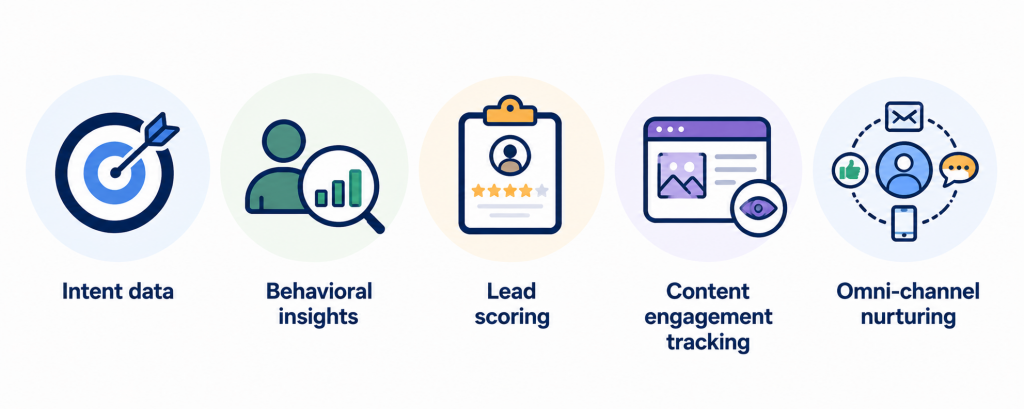
That level of visibility becomes increasingly important as attribution grows more fragmented. It creates a stronger alignment between the sales and marketing teams.
Why First-Party Data Matters More Now
As third-party cookies continue to disappear and AI reshapes discovery, first-party audience relationships are becoming much more valuable. This is particularly important in B2B media environments where trusted audience relationships already exist.
Platforms like IgniteDemand leverage BNP Media’s audience ecosystem across more than 9 industry sectors to help marketers connect engagement activity with real buyer interest. Rather than relying on broad lead metrics, that creates opportunities to:
- Improve lead quality
- Prioritize outreach
- Personalize messaging
- Align campaigns to active interests
- Shorten response times
- Improve sales efficiency
The Future of Attribution Will Be More Contextual
Attribution, if anything, will continue making buying journeys harder to isolate cleanly with things like AI-assisted discovery, conversational search, content saturation, and cross-platform engagement.
But that doesn’t mean that attribution becomes impossible. It simply means marketers need a more contextual view of performance.
The organizations adapting best are now focusing on:
- Engagement quality vs. raw volume
- Behavioral signals vs. isolated clicks
- Audience intent vs. vanity metrics
- Integrated channel strategies and visibility
In B2B marketing, attribution is no longer about identifying that single moment that caused a conversion. It needs to be about understanding the collection of interactions that built enough trust for a buyer to take the next step.
Featured Image from Evanto Elements, by Rawpixel.