
There is a moment in almost every marketing campaign when I start looking at the numbers and trying to figure out what they are really telling me. People are clicking. They’re visiting my website. They’re downloading content, watching videos, opening emails. engaging with my ads.
By most early indicators, my campaign appears to be working. But leads are not progressing. Sales conversations are few. Opportunities are not coming at the pace I was hopeing for.
UGH… What’s the deal?
I’ve been a B2B marketer long enough to know how tempting it is to immediately start questioning the campaign. Do I need different creatives? Is the message wrong? Should I change channels? Am I targeting the wrong people?
Sometimes the answer to one (or more) of those questions is yes. But sometimes the campaign is doing exactly what it should be doing. The problem is that we are expecting the buyer to be somewhere they simply are not yet.
Engagement and buying intent are two different things
One of the harder lessons in B2B marketing is that engagement does not always equal readiness to buy.
Someone can be really interested in a product, service, or solution without having a purchase need. They may be researching a future initiative. They may be educating themselves. They may see a problem developing but do not have the internal support to solve it. Or they may personally believe in the solution while other people in their organization still need to be convinced.
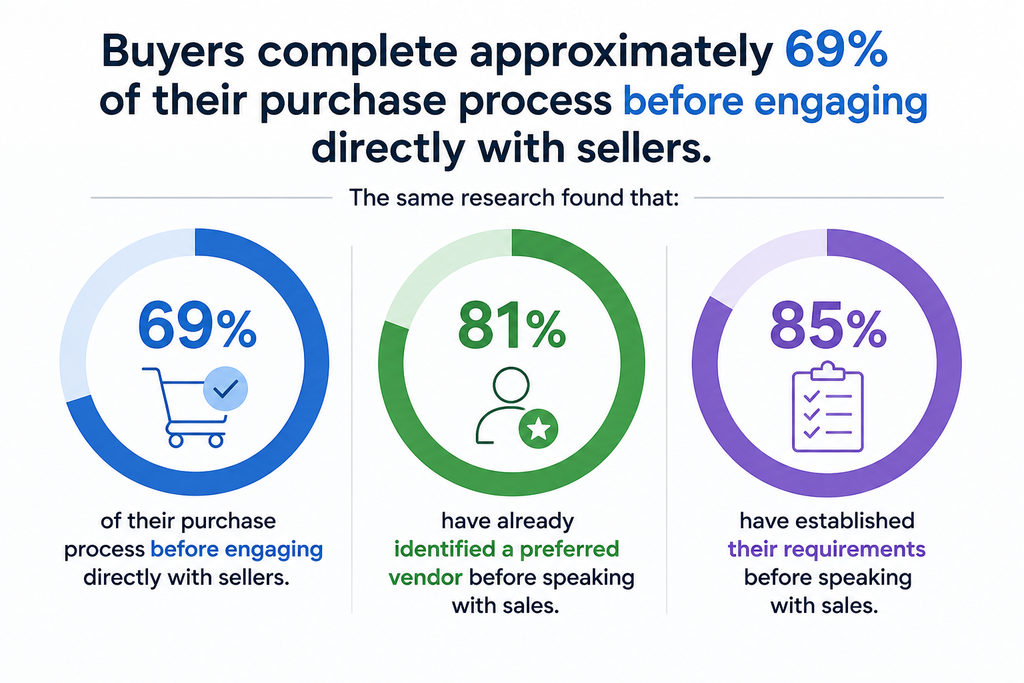
6sense’s B2B Buyer Experience research
That changes how we should think about engagement. A prospect clicking on an ad or reading an article may not be raising their hand for a sales conversation. They may be quietly determining who belongs on their shortlist. That interaction still matters. We just need to measure it accordingly.
In B2B, the person engaging may not be the person deciding
There is another hurdle that anyone who sells to businesses knows well: “the buyer” is very rarely one person.
Research from 6sense found that a typical B2B purchase involves about 11 people and an average buying journey is nearly a full year. Plus… buyers will evaluate 4.6 vendors on average during that process.
That means the person consuming marketing may be only one voice of a much larger group. They might be an engineer researching technical capabilities. An operations manager trying to solve a persistent problem. A marketing director looking for a better approach. An executive gathering information for a future initiative.
Eventually, that person may have to bring the idea to finance, procurement, IT, senior leadership, or another department. And that’s where a seemingly engaged prospect can suddenly vanish.
The 2025 Edelman-LinkedIn B2B Thought Leadership Impact Report found that more than 40% of B2B deals stall because of internal misalignment within buying groups.
For marketers, that should raise a different question. Instead of asking, “Are we reaching our target audience?” we need to ask, “Are we giving that audience what they need to bring other people along?”
Marketing may need to do work without getting the credit
This can be uneasy, especially when budgets are under scrutiny. We are accustomed to looking for a clear line between investment and return. We spent X. We generated Y. Here’s our ROI.
But B2B buying does not always cooperate with a neat attribution model. A buyer may see an ad today, read an article three weeks later, attend a webinar in another two months, stop by a booth as an industry event, and finally reach out to sales months after that.
So… which interaction gets the credit? More importantly, would the final interaction have happened without everything that came before it?
CMI’s 2025 B2B Content Marketing Benchmarks found that 56% of B2B marketers struggle to attribute ROI to their content efforts, and the same percentage report difficulty tracking customer journeys. That does not mean we stop measuring. It means we need to be more thoughtful about what we measure and when.
Ask what the campaign was designed to achieve
This is where I think marketers can save themselves quite a bit of frustration and anxiety. Before evaluating whether a campaign is successful, we need to go back to the original objective.
Was this campaign designed to create awareness where a company is bascially unknown? Was it launched to introduce a new product or service? Was I trying to generate immediate leads? Reach people already showing purchase intent? Stay visible within target accounts?
These are very different objectives, and should not all be judged the same way.
An awareness campaign should eventually contribute to revenue, but expecting it to perform like a search campaign during the same timeframe can lead to poor decisions.
A campaign generating significant engagement but very few qualified opportunities deserves closer attention. Maybe the audience is interested but not ready. Maybe the content is reaching influencers but not those who make the decision. Or maybe the offer attracts curiosity rather than purchase.
The numbers are trying to tell you something. A marketer’s job (aka mine) is to determine what.
Buyers want to do their own homework
There’s yet another reason marketers should be careful about equating a lack of sales conversations with a lack of progress. B2B buyers prefer to research independently.
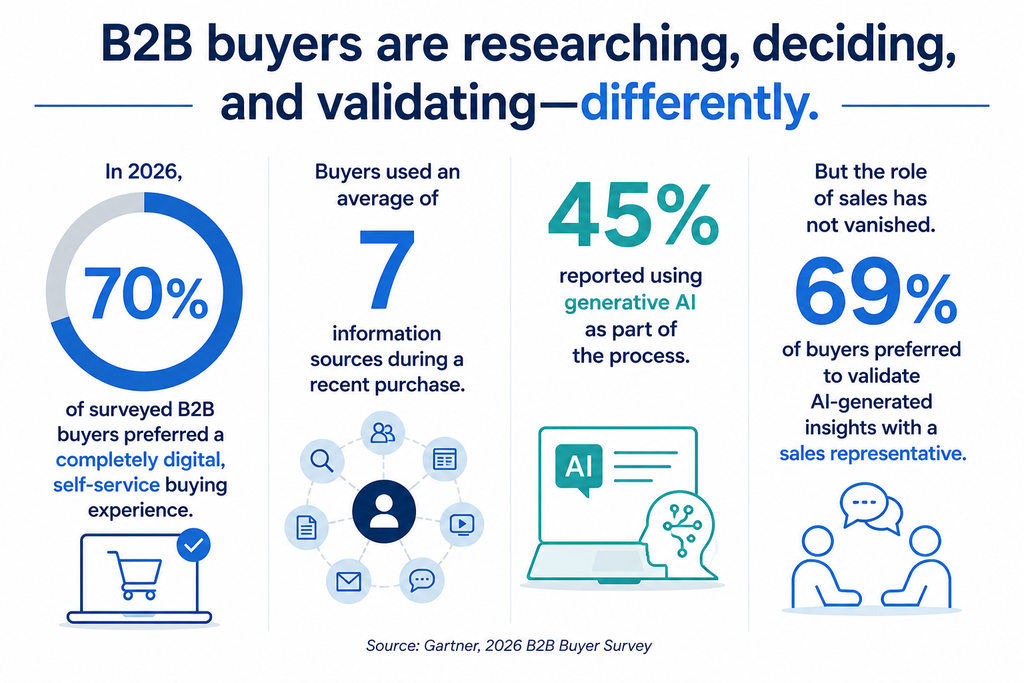
Your prospects may spend considerable time learning without ever identifying themselves. When they finally want human interaction, they need something beyond what they read on a website. They want context, expertise, validation, and help applying what they have learned to their own situation.
Marketing has to prepare them for that conversation. Sales has to make that conversation worth having.
Look beyond “Did it convert?”
When a campaign is getting engagement without expected conversions, look at several areas before deciding it’s not working:
- Who’s engaging? Are they actually part of my target market, or are my numbers being inflated by people unlikely to become customers?
- Where are they in the buying process? Am I offering a sales conversation to someone who is still trying to understand the problem?
- Who’s missing? If I am reaching users and influencers, do I have a strategy for reaching those who make the decision?
- What happens after engagement? Is there a logical next step, or does every journey immediately lead to “Contact Sales”?
- Is sales doing their part? Marketing cannot be responsible for weak, slow, or poorly timed follow-up.
- Am I measuring the right things? The KPI for an awareness campaign is different from the KPI for a lead gen campaign.
- Have I given the campaign enough time? My company’s reporting calendar and my customer’s buying cycle are rarely the same thing. This question is sometimes overlooked.
Sometimes the answer is to adjust. Other times it’s to wait.
There are campaigns that should be stopped. There are campaigns where the audience, message, creative, channel or offer clearly needs to change. Continuing to spend because “B2B takes time” is not a strategy.
But there are also campaigns that need time to do their job. The challenge is learning to distinguish between the two. Look for progression, not just activity.
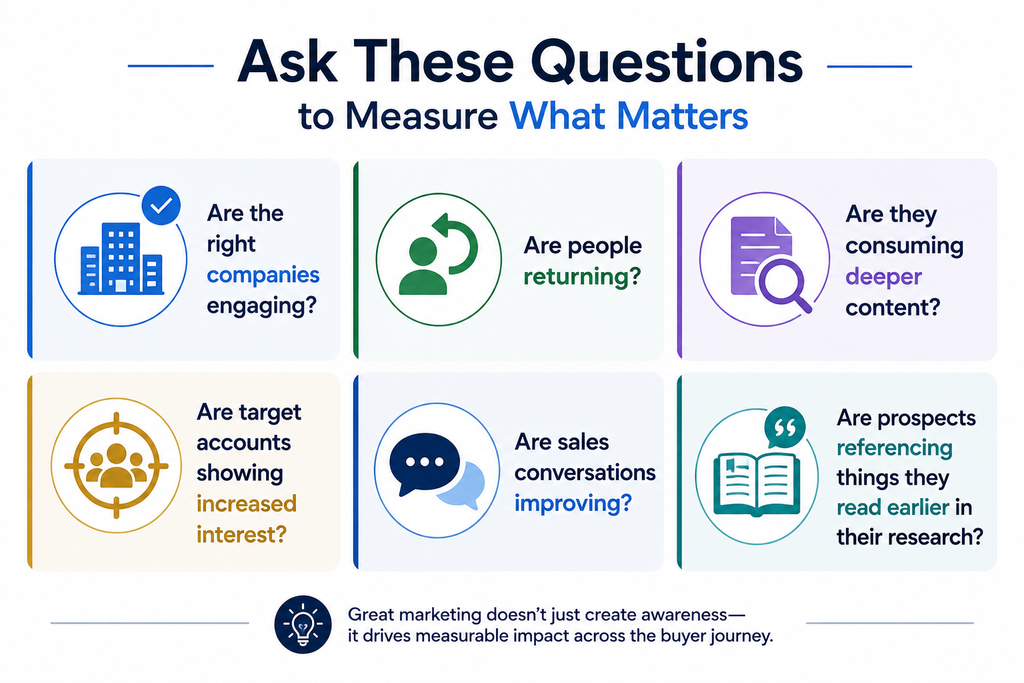
Those signals tell a much deeper story than clicks alone. And when someone finally does convert, look back. The interaction immediately before the conversion may not be the interaction that created the opportunity.
The true goal is momentum.
Clicks, views, downloads, and opens are useful signals. They tell me that someone noticed. But B2B marketing has a larger job.
We need to help buyers understand a problem, recognize when it needs attention, evaluate their options, build confidence in a solution and, sometimes, make the case internally. That will take more than one ad, one email, or one campaign.
So, when engagement is strong but conversions are not, stop the urge to look at one number and admit success or failure. Look at who’s engaging. Look at what they are doing next. Look at the entire buying group. Look at the timing. Listen to what sales is hearing. Then decide whether your marketing needs a different direction or simply more time.
Sometimes the most valuable marketing is already working well before the prospect is ready to tell you that it worked.
Image courtesy of Olivier Le Moal, via Envato Elements.